Certificazioni

    Unkategorisiert

    Fairs and Events, News, Unkategorisiert

    Innovative compostable packaging solutions: BIOPAP® together with NOVACART at Interpack Düsseldorf (HALL 7 – Level 0 – Stand C20)

    BIOPAP® innovations arise from the integration of materials, design, processing technologies, and production processes with the goal of achieving maximum functional performance, minimizing resource consumption, and utilizing by-products. This approach improves food quality, increases operational efficiency, reduces food waste, and optimizes costs along the entire value chain.

    In this context, BIOPAP® solutions are no longer just containers, but become a strategic factor for competitiveness, sustainability, and operational efficiency in professional catering and the food industry.

    Visit us at Interpack, from 07 to 13 May in Düsseldorf in HALL 7 – Level 0 – Stand C20

    We will be together with our associates NOVACART, the world leader in paper-based baking moulds and advanced baking cups.


    Success factors:

    – Compostable food packaging solutions ideal for the most extreme processes: from –90 °C in liquid nitrogen tunnels up to +185/215 °C ensuring best organoleptic results with full regulatory and operational safety, with no risks from foreign bodies, material migration or softening of the material;

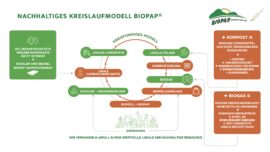
    – Full sustainability from raw materials, to ZERO CO2 emission production plants, down to biologically circular end-of-life transforming wastes into valuable renewable resources.
    -BIOPAP® solutions are manufactured in Europe, with a European supply chain and PEFC certified raw materials.

    Visit us to discover our range and the last game-changing innovations.
    News, Unkategorisiert

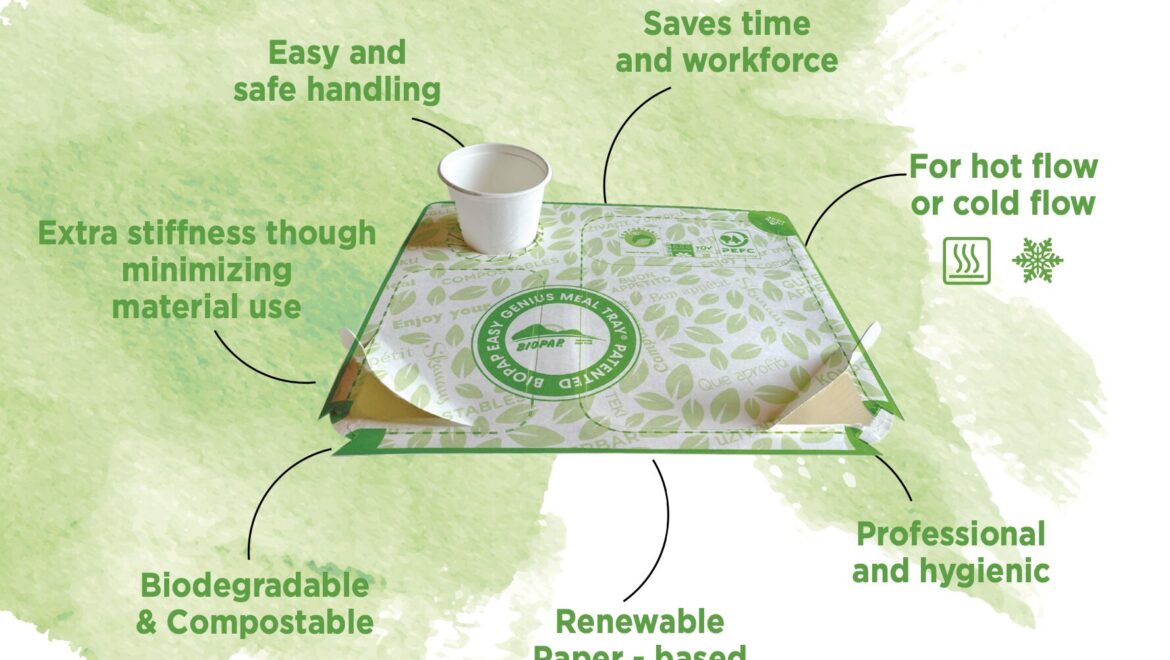
    Revolutionizing MealService in Zagreb: Biopap® patented EasyGenius, deployed at University Hospital Centre

    Revolutionizing MealService in Zagreb: Biopap® patented EasyGenius, deployed at University Hospital Centre with Extrapoint and Valter Berneš!

    One Solution, Endless Benefits! As hospitals, catering services, and institutions face mounting challenges in hygiene, sustainability, and cost-efficiency, Biopap® The revolutionary EasyGenius Meal Tray delivers a game-changing answer. Now successfully deployed at University Hospital Zagreb, this award-winning meal system is proving its worth where it matters most.


    Why BIOPAP® EasyGenius Meal Tray?

    ✔ Hygienic & Safe: Individually sealed meals prevent contamination, ideal for infectious wards and oncology patients. No contact between staff and food ensures 100% sterility.
    ✔ Sustainable & Circular: Made from renewable, compostable materials, reducing CO2 emissions by 66% compared to plastic trays. No washing, no plastic waste, fully compliant with EU regulations!
    ✔ Cost-Efficient & Practical: Eliminates dishwashing, reduces staff workload, and optimizes meal logistics. Meals can be chilled, frozen, transported, and regenerated on-site up to 175°C!
    ✔ Lightweight & Versatile: Half-Gastro size ensures easy stacking and transport, reducing GHGemissions and physical strain on personnel.
    Zagreb’s Challenge, Our Solution! With kitchen renovations at Croatia’s largest hospital, 3,000 daily meals needed a safe, efficient alternative. Biopap® EasyGenius Meal Tray seamlessly stepped in, ensuring continuous, high-quality meal service without an operational kitchen.
    As a result, the hospital not only tackled a temporary crisis but has decided to keep BIOPAP ® EasyGenius Meal Tray for long-term use in high-risk wards!
    Future of Food Service is Here! From hospitals to emergency response, military catering to large-scale events, EasyGenius transforms meal service worldwide. Ready to elevate your operations with our unique, patented solution?

    #EasyGenius #SustainableCatering #Zagreb #HospitalityInnovation #CircularEconomy #FoodServiceRevolution

    Unkategorisiert

    Italy Best Practice in biological circularity: from the collection of bio-waste with compostable food packaging to the transformation into compost.

    This positive evolution that places Italy as a Best-Practice has gone hand in hand with the development of separate waste collection, which already began in the mid-1990s with the Ronchi Decree. Milan is an excellence among excellences, the city that collects the most bio-waste per capita in all of Europe with over 110 kg/inhabitant equal to 6 times the EU average and allowing a savings in CO2 emissions of over 9000 T/year.


    Italian legislation also requires certified compostable packaging to be collected in the organic fraction of municipal solid waste (FORSU). In fact, compostable food packaging has its ideal end of life together with food residues and kitchen waste to which they give dry matter and from which they draw humidity and microorganisms to facilitate their degradation and disintegration. According to recent BIOREPACK data, in 2022 over 46,600T of compostable packaging was composted out of a total of over 4.6 million T of total bio-waste collection, equal to approximately 1% of the total.


    But compost is not the only positive result of organic waste collection. In the integrated cycles of anaerobic digestion, in addition to composting used for agriculture, also biomethane is produced for automotive use and carbon dioxide for food industry applications. Italy currently has the largest and most advanced organic fraction treatment systems because it has been able to create a virtuous circle with a great variety of treatment plants throughout the territory, favoring the growth of local ecosystems and with great advantages for agriculture.


    The recent proposal under discussion of the European Commission on the management of packaging waste has completely neglected this excellent experience which works both economically and environmentally, bringing a significant positive effect in terms of fighting against climate change. The Italian Model deserves to become a benchmark and can be spread throughout Europe with significant advantages for the environment and for local communities.


    https://zerowastecities.eu/wp-content/uploads/2021/11/Milan-Case-Study-1.pdf